
Evolution of Swarovski Rose Flat Back Crystals: From Rose to XILION and XIRIUS
Swarovski's round Rose flat-back crystals have evolved through several generations of precision cutting, each refining the relationship between facet geometry, reflected light and application technology. The lineage discussed here begins with the earlier 2012 Rose, continues through the 2028 XILION Rose, develops into the enhanced XILION generation represented by 2058 XILION Rose Enhanced No Hotfix and 2038 XILION Rose Hotfix, and culminates in the later 2088 XIRIUS Rose and 2078 XIRIUS Rose Hotfix crystals.
The Rose lineage has become Swarovski's principal round Flat Back family and one of the most popular and widely used formats for both glue-on and heat-applied crystal decoration. It forms the core round assortment within Swarovski Flat Backs No Hotfix and Swarovski Flat Backs Hotfix. Although these two families use different fixing systems, their optical development follows the same broader progression toward more sophisticated facet geometry, stronger brilliance and a more dynamic interaction with light.
The main generations covered in this guide can also be explored directly in the eCrystalHouse catalog: Swarovski 2028, 2058 & 2088 XILION/XIRIUS Rose No Hotfix and Swarovski 2028, 2038 & 2078 XILION/XIRIUS Rose Hotfix.
How the Swarovski Rose Flat Back Cut Evolved
The history of the modern Swarovski Rose flat back can be understood as a sequence of successive generations. The familiar round outline and flat mounting surface remained, while Swarovski repeatedly refined the number, proportions and arrangement of the visible facets to improve how the crystal receives, reflects and returns light.
2012 Rose — the Earlier 12-Facet Generation
2012 Rose represents one of the earlier generations in this development and uses a 12-facet geometry. Compared with simpler preceding round flat-back designs, its faceting divided incoming light across a greater number of reflective surfaces and established an important step toward the later XILION and XIRIUS generations.
Article 2012 Rose has been discontinued and is no longer part of Swarovski's current production program. eCrystalHouse currently does not carry 2012 Rose as active stock, although historic crystals may still be encountered in older designs and remaining inventories.
The 2012 Rose was produced for both conventional adhesive-based decoration and Hotfix application. It therefore forms an early common point in the development of the later No Hotfix and Hotfix Rose families.
2028 XILION Rose — the 14-Facet XILION Generation
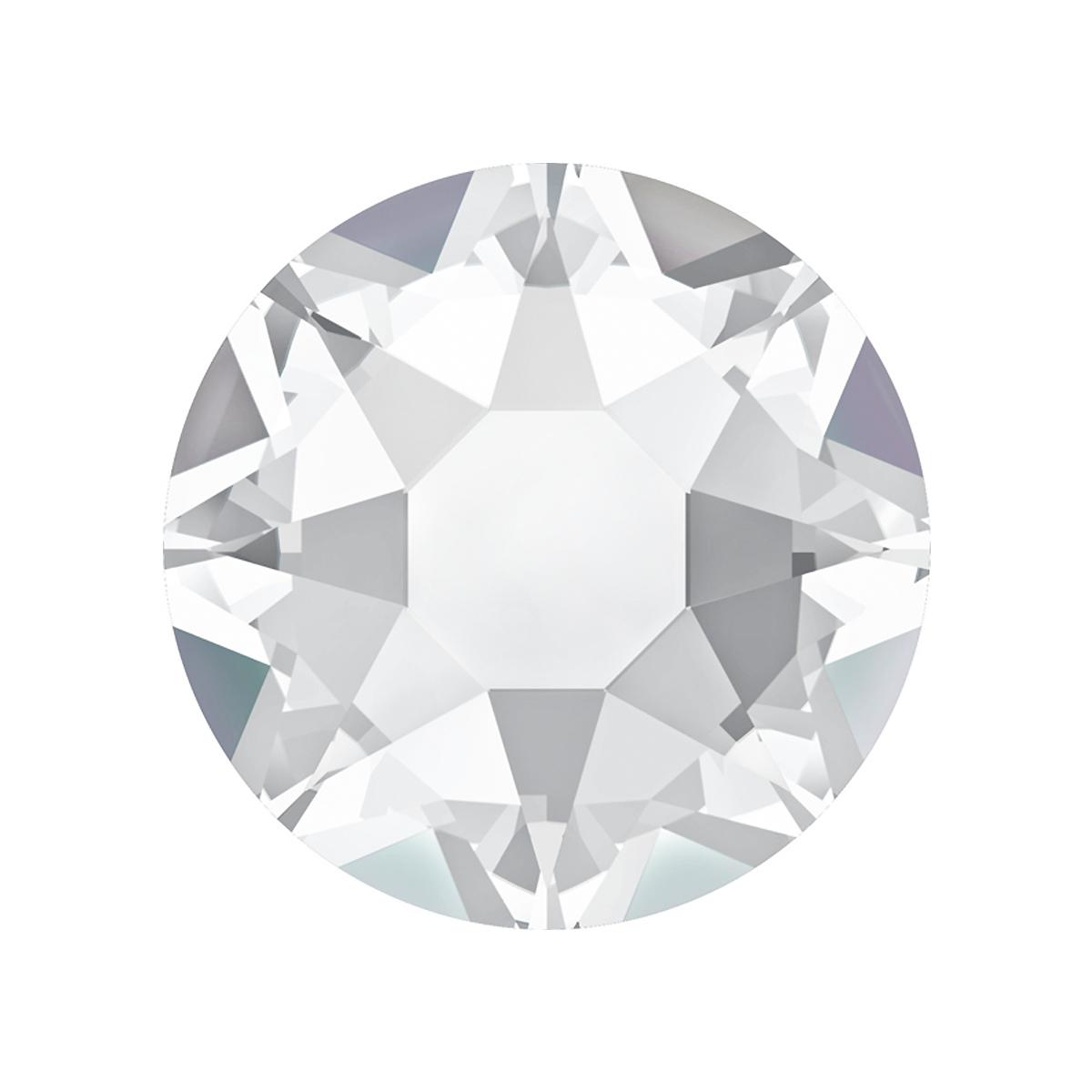
The next important generation was 2028 XILION Rose. Its 14-facet geometry introduced the XILION design language that became widely associated with Swarovski round flat-back crystals.
The additional facets and revised geometry gave the crystal a more structured optical pattern, producing a greater number of changing reflections as the viewing angle or light source moved. 2028 XILION Rose was produced in both No Hotfix and Hotfix versions and became a major round Flat Back article for fashion, costume, textile and decorative applications.
2028 XILION Rose has since been discontinued from Swarovski's current production program. Genuine original crystals can nevertheless still be found as remaining stock in the market, which is why the 2028 article number continues to appear in historic specifications, existing designs and older color inventories.
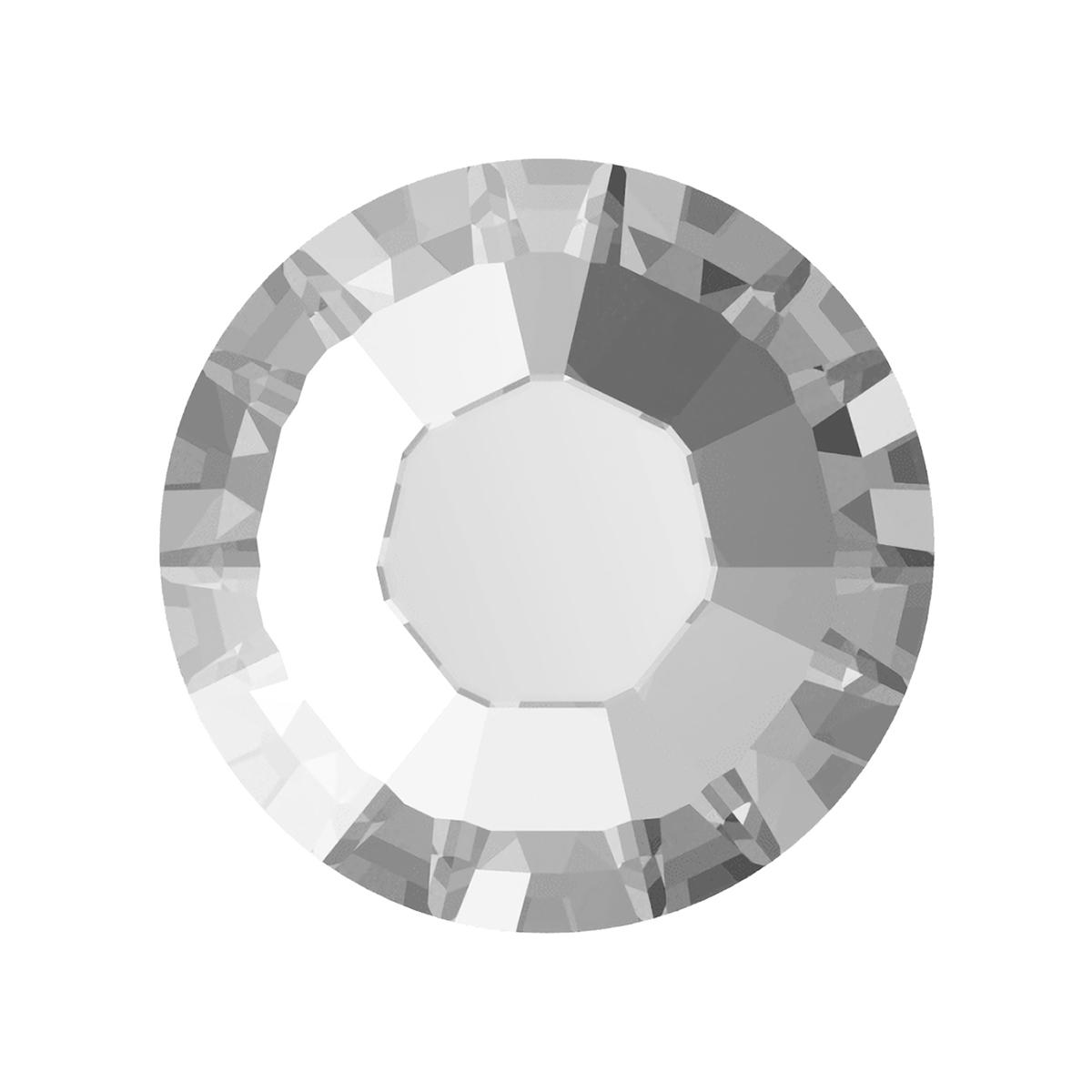
2058 XILION Rose Enhanced and 2038 XILION Rose Hotfix
Swarovski subsequently refined the XILION concept without changing its fundamental 14-facet architecture.
For No Hotfix applications, the new generation became 2058 XILION Rose Enhanced. Swarovski's original innovation materials presented 2058 XILION Rose Enhanced as the successor to the earlier 2028 XILION Rose and described the revised proportions and facet geometry as improving brilliance and color intensity.
The related No Hotfix generations are grouped in the Swarovski 2028, 2058 & 2088 XILION/XIRIUS Rose category.
On the Hotfix side, the corresponding development became 2038 XILION Rose Hotfix. Swarovski presented 2038 XILION Rose Hotfix as the refined successor to the earlier 2028 XILION Rose Hotfix. It retained a 14-facet XILION architecture while modifying the proportions of the crystal, including its table size, to increase brilliance and make reflected colors appear brighter and more intense.
The Hotfix generations are grouped in the Swarovski 2028, 2038 & 2078 XILION/XIRIUS Rose Hotfix category.
What Is the Table Facet?
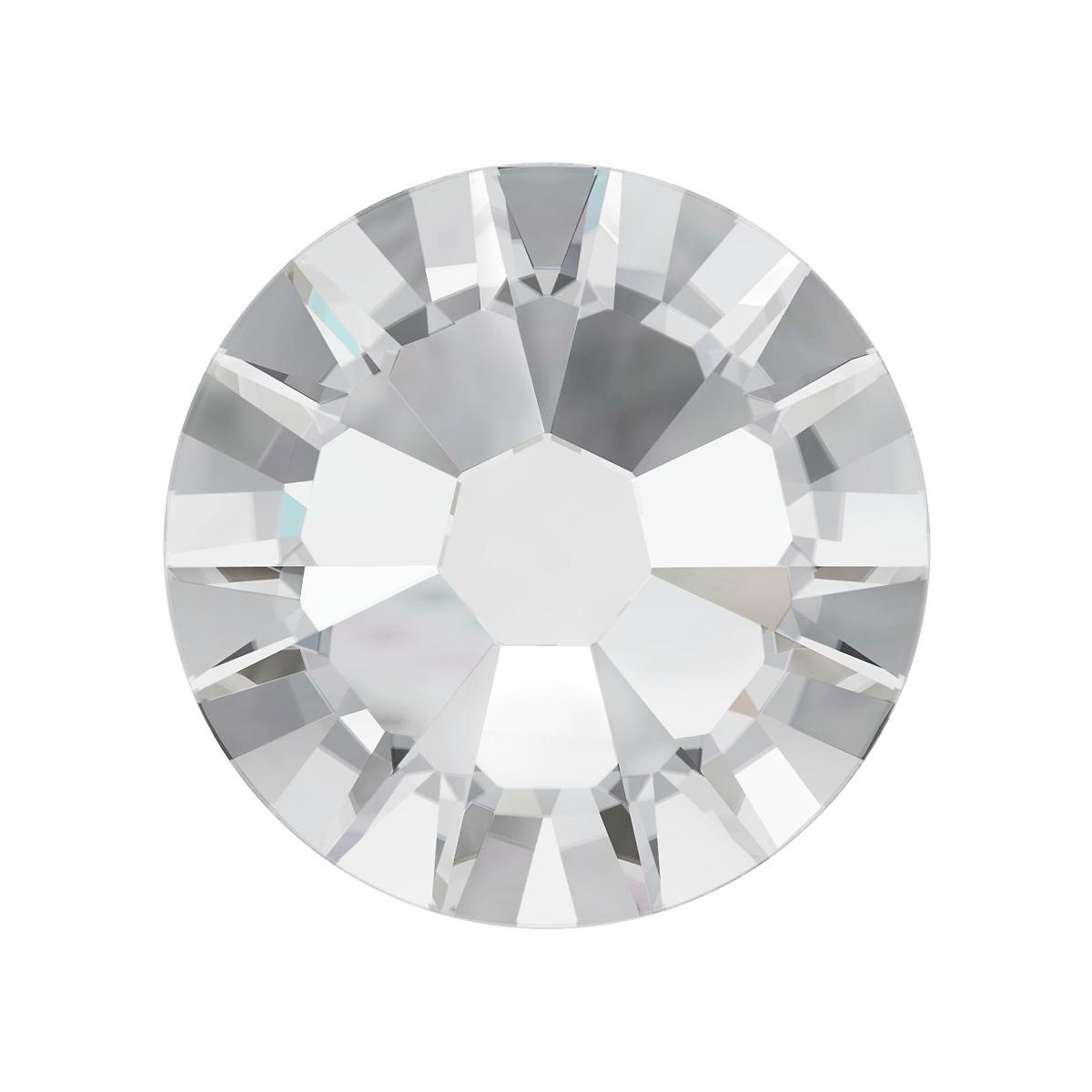
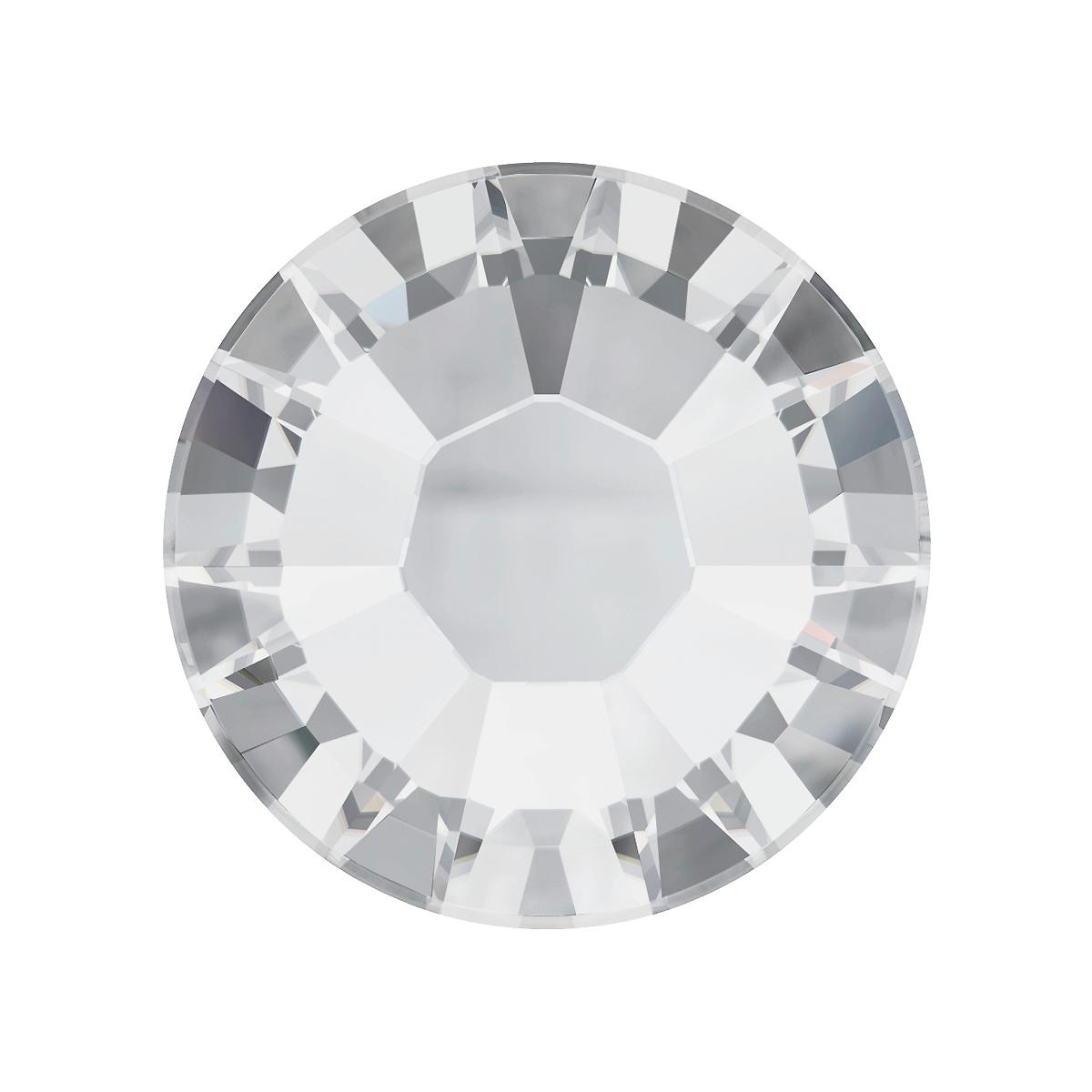
The table, or table facet, is the central flat facet on the visible front of a faceted crystal. Its dimensions and its relationship with the surrounding facets influence how light enters the crystal and how reflections are distributed across its surface.
The table should not be confused with the flat reverse of a Flat Back crystal. The table is an optical element on the front of the crystal; the reverse side is the mounting surface. In Hotfix articles, the heat-activated adhesive system is applied to this reverse side.
Swarovski's documentation of the transition to 2038 XILION Rose Hotfix discusses changes to table size in connection with improved brilliance and color appearance. It should therefore not be assumed that Hotfix crystals universally use a larger table specifically to conduct heat. Heat transfer during Hotfix application is a separate application-engineering issue governed by the complete crystal, adhesive system, carrier material, temperature, pressure, time and application side.
XIRIUS Rose — the 16-Facet Generation
The introduction of XIRIUS Rose marked the next major optical step. 2088 XIRIUS Rose became the later No Hotfix generation, while 2078 XIRIUS Rose Hotfix brought the same design philosophy to Hotfix applications.
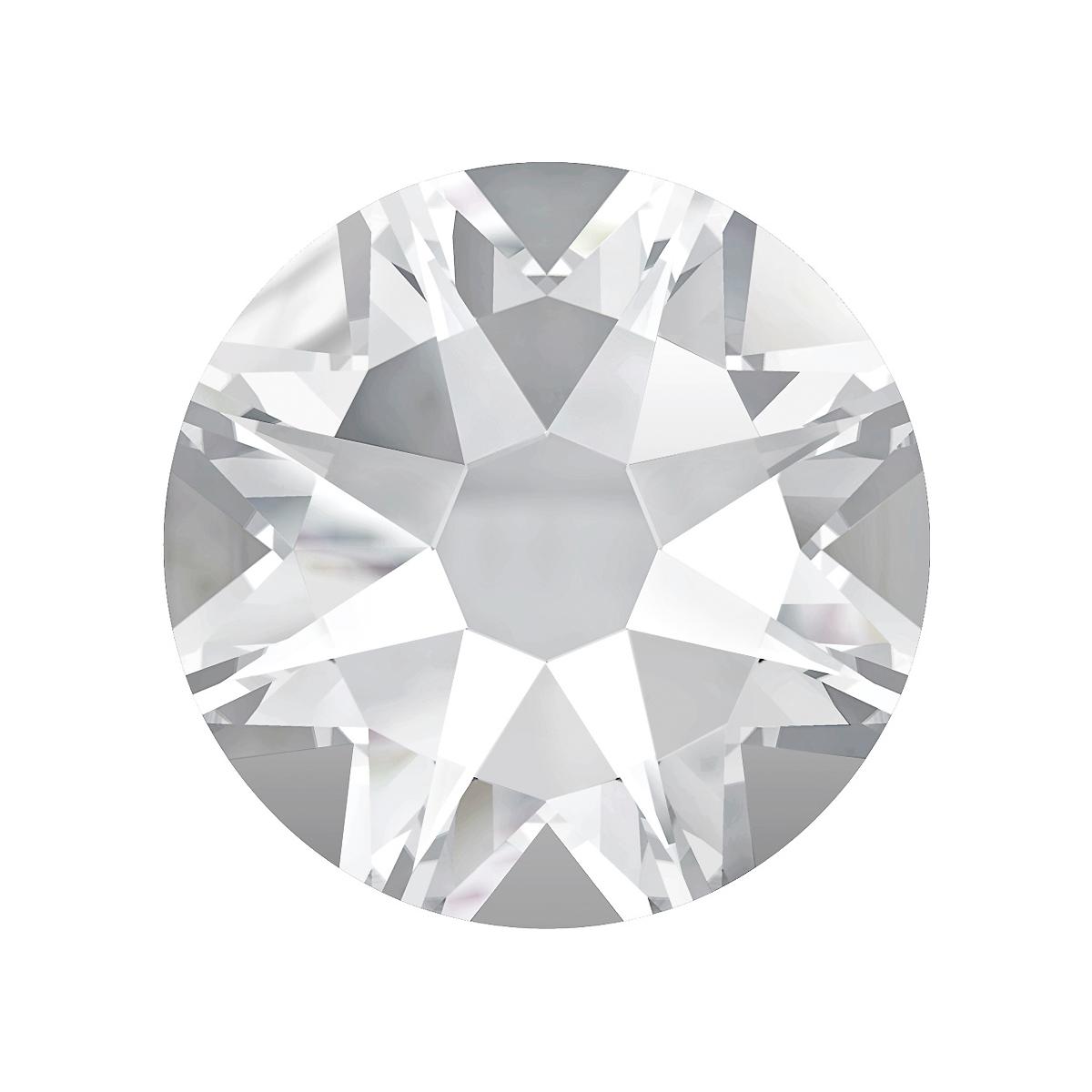
XIRIUS uses a 16-facet, star-like multilayer geometry rather than the 14-facet XILION arrangement. Swarovski did not develop the new cut simply by adding two facets. According to the manufacturer's XIRIUS development material, more than 10,000 photometric simulation cuts were evaluated during the design process before a small number of geometries progressed to expert and market assessment.
The final XIRIUS geometry creates a more complex network of precisely oriented reflective surfaces. Incoming light is divided, reflected and refracted across multiple directions. As the crystal, wearer or light source moves, different facets catch the light in rapid succession.
This produces the characteristic visual quality of XIRIUS: crisp highlights appear and disappear across the face of the crystal, creating repeated flashes and lively scintillation rather than one broad, static reflection. The result is a richer and more animated play of light than in the earlier Rose generations.
Swarovski's own development material describes XIRIUS in terms of improved distribution of light points and increased brilliance. In practical use, this is perceived as a crystal that responds very actively to movement and changing illumination: a small change in angle can cause several individual facets to illuminate in sequence, creating the sparkling flashes associated with the XIRIUS Rose cut.
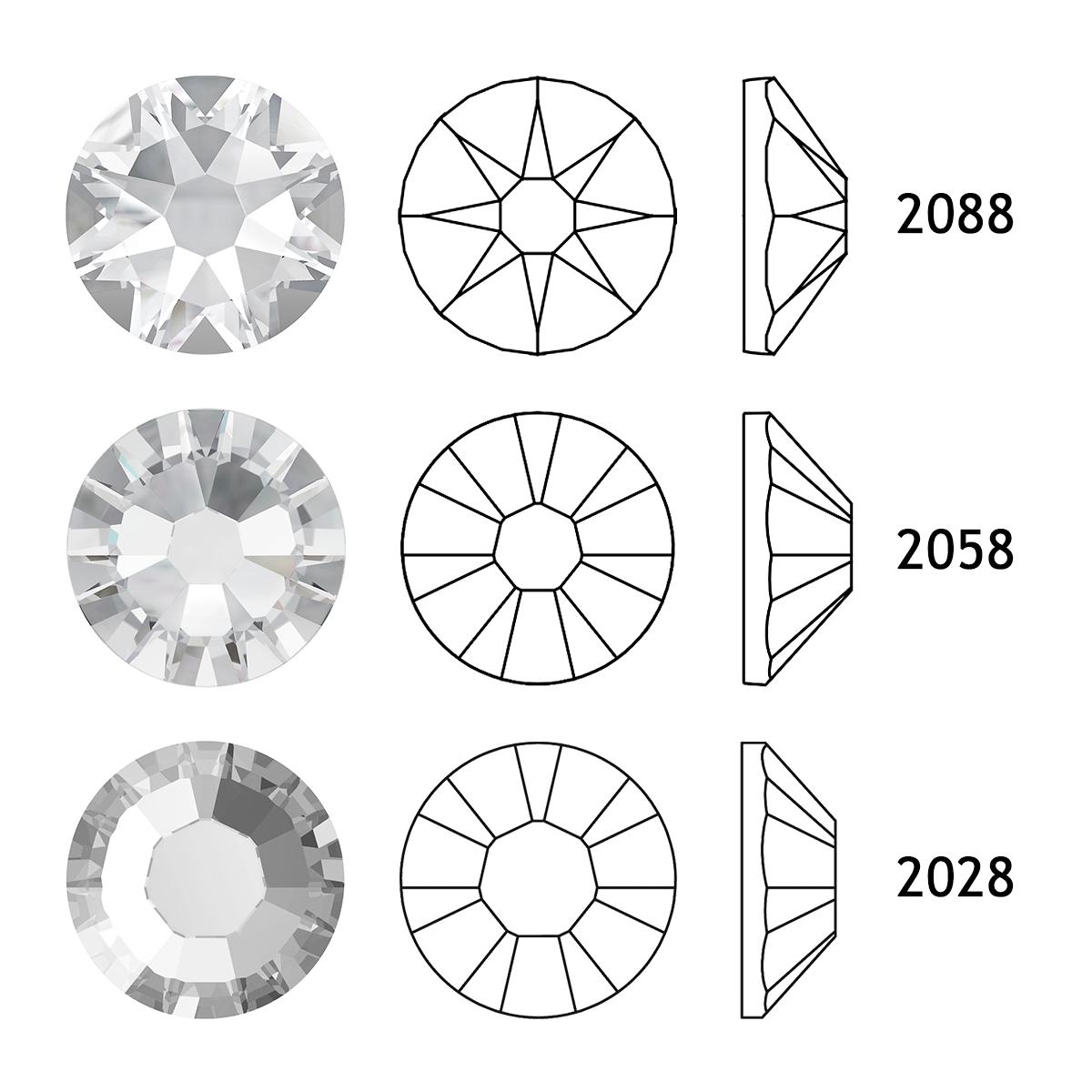
Comparing the No Hotfix Rose Generations
The progression from 2028 XILION Rose through 2058 XILION Rose Enhanced to 2088 XIRIUS Rose shows how Swarovski retained the familiar round Flat Back format while progressively refining the proportions and optical behavior of the cut. The transition from the 14-facet XILION architecture to the 16-facet XIRIUS geometry is especially visible when the three generations are compared directly.
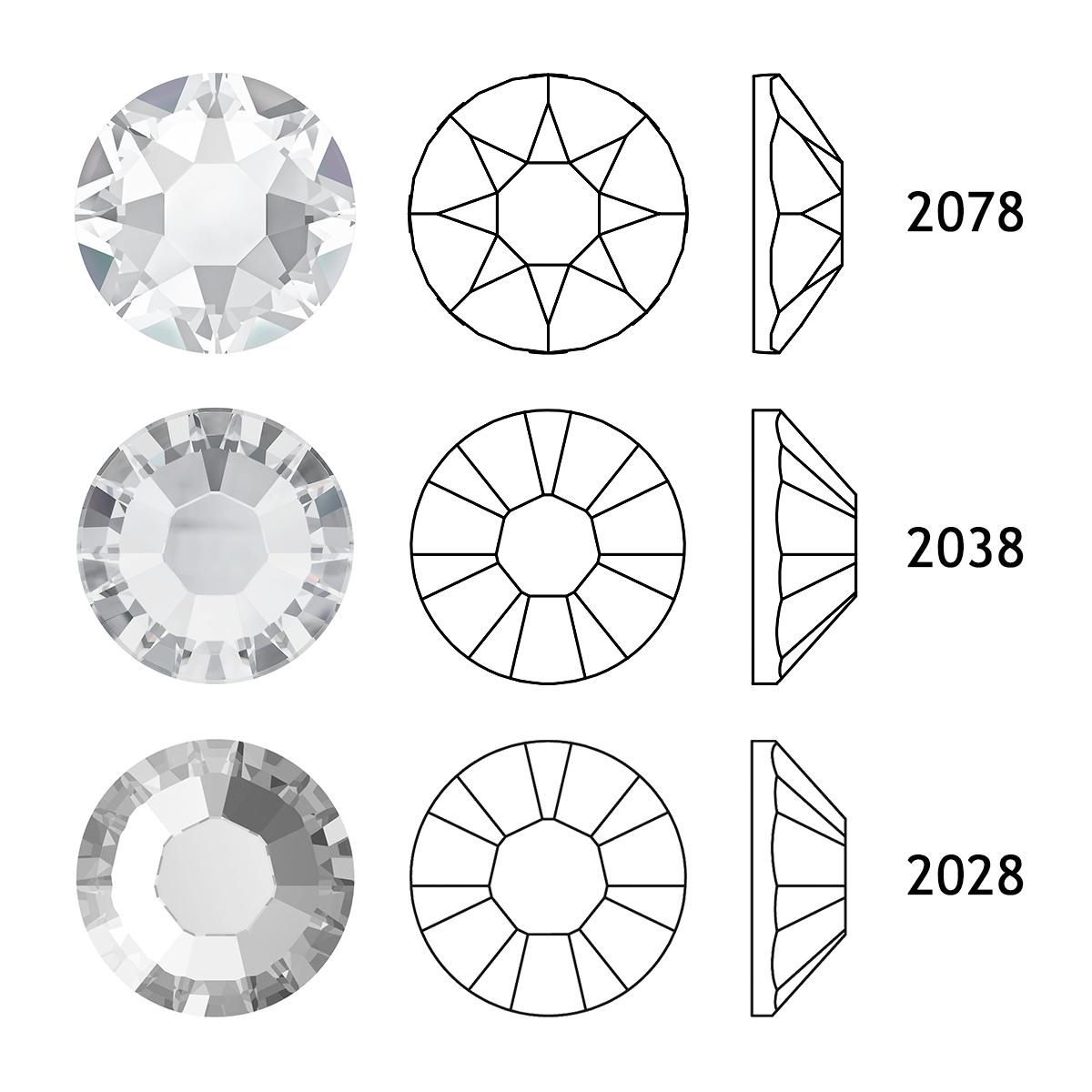
Comparing the Hotfix Rose Generations
The Hotfix lineage follows the same broader optical evolution. The earlier 2028 XILION Rose Hotfix was succeeded by the refined 2038 XILION Rose Hotfix, while 2078 XIRIUS Rose Hotfix introduced the later 16-facet XIRIUS geometry. The comparison below illustrates the changes in facet arrangement and proportions across these Hotfix generations.
No Hotfix and Hotfix: The Same Optical Evolution, Different Fixing Systems
The Rose cut developed along closely related No Hotfix and Hotfix paths. Their visible optical evolution is similar, but their attachment systems are fundamentally different.
Swarovski Flat Backs No Hotfix
Swarovski Flat Backs No Hotfix have a flat reverse without a factory-applied heat-activated adhesive. They are normally attached using a separately selected compatible adhesive.
This gives the designer or manufacturer control over the bonding system and makes No Hotfix crystals suitable for many applications where heat is undesirable, where the substrate cannot safely tolerate Hotfix processing, or where a separately chosen adhesive is preferable.
The principal round Rose generations covered in the eCrystalHouse No Hotfix catalog can be found on the 2028, 2058 & 2088 XILION/XIRIUS Rose page.
Swarovski Flat Backs Hotfix
Swarovski Flat Backs Hotfix have a heat-sensitive adhesive system pre-applied to the reverse of the crystal. Controlled heat activates the adhesive, pressure brings the molten adhesive into effective contact with the carrier material, and the bond develops as the application cools.
The corresponding Rose generations are grouped on the 2028, 2038 & 2078 XILION/XIRIUS Rose Hotfix page.
How Heat Reaches the Hotfix Adhesive
Hotfix application is a controlled thermal process. The most important parameters are temperature, pressure, application time and application side. Swarovski provides detailed technical guidance on these factors in the Swarovski Application Manual, including dedicated instructions for Hotfix application, carrier-material testing and troubleshooting.
Depending on the carrier material and equipment, heat can be supplied from the front or from the reverse side. When a suitable textile is heated from the reverse, thermal energy passes through the carrier material toward the Hotfix adhesive. This can provide a short and efficient heat path when the material is sufficiently thin and heat resistant.
When an approved process applies heat from the front, thermal energy must pass through the crystal before reaching the heat-activated adhesive on the flat reverse. The crystal therefore participates in the heat-transfer path, but the efficiency of the process depends on much more than the shape of the front table facet.
The appropriate application side is the one that brings the adhesive evenly into its required processing range without damaging the crystal or carrier material. Material thickness, absorbency, surface finish, heat resistance, temperature, pressure and application time all influence the final bond.
Swarovski's Hotfix guidance uses application parameters for different products and materials to establish suitable processing conditions. The manufacturer's recommendations should be treated as starting values, and the complete crystal, material and equipment combination should be tested before series production.
For detailed information about Hotfix temperature, pressure, application time, application side and troubleshooting, consult the Swarovski Application Manual.
Current XILION and XIRIUS Rose Sizes
Within the current No Hotfix XILION/XIRIUS Rose family represented by 2058 XILION Rose Enhanced and 2088 XIRIUS Rose, article 2058 covers the smaller SS5–SS10 range (approximately 1.7–2.9 mm), while article 2088 continues through SS12–SS48 (approximately 3.0–11.3 mm).
Together, 2058 XILION Rose Enhanced and 2088 XIRIUS Rose provide 15 current catalog size positions across an overall diameter span of approximately 1.7–11.3 mm. Swarovski also retains 2000 Rose separately for the smallest No Hotfix sizes, outside the combined 2058/2088 category discussed here.
For Hotfix, 2038 XILION Rose Hotfix covers SS5–SS10 (approximately 1.7–2.9 mm), while 2078 XIRIUS Rose Hotfix covers SS12–SS48 (approximately 3.0–11.3 mm). The current 2038/2078 program contains 11 catalog size positions across the same approximate 1.7–11.3 mm overall span. 2000 Rose Hotfix remains a separate solution for the smallest size.
The SS ranges describe the overall span and should not be read as meaning that every numerical SS size between the endpoints is manufactured. Each article is produced only in its specified catalog sizes.
More Than 240 Colors and Effects
The importance of the Rose family is not limited to its size range. The eCrystalHouse catalog contains more than 240 catalogued color and effect variants across the No Hotfix Rose-family assortment and more than 240 color and effect variants across the corresponding Hotfix assortment.
This broad palette includes classic transparent colors as well as crystal effects, coated appearances, metallic-looking effects and other article-specific variants. Combined with the available size ranges, it makes the Rose family exceptionally flexible for fashion, dancewear, stage costume, bridal, accessories and other decorative applications.
Not every color or effect is produced in every article and every size. Availability must therefore always be checked for the exact combination of article, size and color or effect rather than assuming that the complete family palette applies to every product variant.
Why the Rose Family Became the Leading Round Flat Back Format
The long-term success of the Rose family comes from the combination of a simple round outline and increasingly sophisticated optical engineering. The round shape has no strong directional orientation, which makes it easy to repeat over large decorated areas, arrange in gradients, combine across several sizes or integrate with more complex crystal shapes.
At the same time, each generation improved the way the visible surface manages light. The 12-facet 2012 Rose established an early multi-facet structure. The 14-facet 2028 XILION Rose developed this into the XILION generation. The enhanced 2058 XILION Rose Enhanced and 2038 XILION Rose Hotfix refined the proportions and brilliance of that architecture. Finally, the 16-facet 2088 XIRIUS Rose and 2078 XIRIUS Rose Hotfix introduced a more complex star-like geometry with a livelier distribution of highlights.
This combination of practical round geometry, extensive size coverage and a very broad color/effect assortment has made the Rose lineage the leading round crystal family within both No Hotfix and Hotfix Flat Backs.
Choosing Between No Hotfix and Hotfix Rose Crystals
Choose Swarovski Flat Backs No Hotfix when the application requires a separately selected adhesive, when precise manual glue placement is desirable or when the carrier material is unsuitable for Hotfix processing. The combined historic and current Rose generations can be explored on the 2028, 2058 & 2088 XILION/XIRIUS Rose No Hotfix page.
Choose Swarovski Flat Backs Hotfix when the carrier material is compatible with controlled heat and pressure and a factory-applied heat-activated adhesive system is preferred. The corresponding generations are available through the 2028, 2038 & 2078 XILION/XIRIUS Rose Hotfix page.
For Hotfix production, always verify the actual carrier material and application parameters against the Swarovski Application Manual and test the intended crystal, material and equipment combination before full production.